Windows, Mirrors and Sliding Glass Doors
Book banning and gerrymandering are the topics of this column
by Craig Wiesner - San Mateo Daily Journal - May 18, 2026
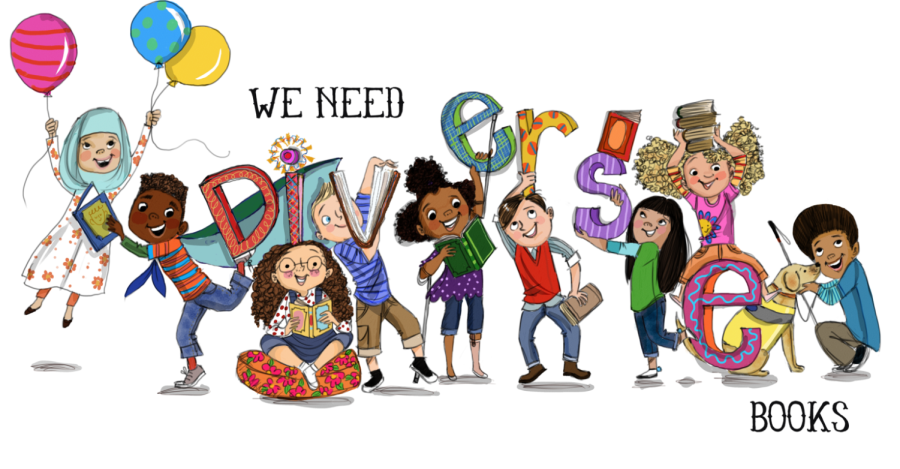
As a bookseller I’m always on the lookout for titles that feature the wonderful diversity of the types of people with whom we share the planet. Members of our industry, publishers, authors, illustrators, reviewers, librarians and booksellers, believe that books can be “windows, mirrors, and sliding glass doors” for those who discover and read them. That phrase was coined by Dr. Rudine Sims Bishop in 1990 to describe how literature reflects, reveals, and transports readers. Diverse books, according to Bishop’s thinking, should act as mirrors reflecting a reader’s own identity, windows offering views into other lives, and sliding glass doors allowing readers to enter new worlds. Why, some would ask, do we need to concern ourselves with such things? I and many others would say that diversity in literature is one of the keys to creating a more compassionate, empathetic, and peaceful world. Yeah, that’s WOKE.
If you’re 50 or older, think back to your childhood experiences reading. If you’re white, heterosexual, and cisgender, there were lots of mirrors. Otherwise… not so much. I’ve written before about Mildred Pitts Walter, a black woman born in 1922 in Louisiana, who spoke out at a 1960s book conference about the lack of children’s books featuring African-American characters. Some in the audience booed her and that inspired her to start writing her own books, eventually winning recognition including the Coretta Scott King and Jane Addams Children’s Book Awards. Her books weren’t just critically well received, they also sold well, which inspired publishers to take more chances with diverse authors, illustrators and characters. We were the booksellers for a talk by Mildred about her autobiography, Something Inside So Strong. She’s awesome!
While there’s been progress on getting diversity in literature, diverse readers know that much more work has been needed and still is. Last decade, recognizing that we still had a LONG way to go in the industry, the hashtag “We Need Diverse Books” went viral and an organization was launched with that name. They’ve done incredible work transforming bookshelves and communities. Visit them at diversebooks.org
Sadly, other forces have been at work trying to keep diverse books off library shelves, out of schools, and even out of bookstores. PEN America tracks book banning across the country and reports on the “most banned books” annually. Attempts to ban books have skyrocketed in the last few years, with 4,235 unique titles being challenged in 2025. Books representing the lived experiences of LGBTQIA+ and black people were the most commonly challenged. Moms for Liberty is one of the most active organizations in the country challenging books. Funny, it seems oxymoronic for an organization with the word “liberty” in its name to be banning books. Fortunately, PEN America, the American Library Association, the American Booksellers Association, along with publishers and authors, have been successfully fighting book bans, winning many court and legislative battles, but not all.
Given the continuing diversification of the United States, I hope that books, films, plays, and all ways we see each other continue to evolve to better represent us all. Given that many in the MAGA movement perceive any policies and programs specifically promoting diversity to be discrimination against white, heterosexual, cisgender people, it has become quite a battle. The same is true for trying to have more diverse representation in government. Before the Voting Rights Act of 1965, there were only around 100 black elected officials in the country. Today there are over 10,000, with 62 in Congress. That progress was dealt a severe blow on April 29th when the Supreme Court struck down a Louisiana Congressional map that included a majority-black district, with their governor quickly halting an ongoing election to redistrict. Seizing the opportunity, Tennessee’s legislature immediately moved to break up Memphis, a majority-black (and Democratic party stronghold) city, into three new districts where Republicans would dominate each district.
Nationwide, gerrymandering has been wild since the president, hoping to avoid a Democratic landslide in the Congressional midterms, asked Texas to redistrict to increase the number of likely-to-win Republican Party seats. Other states, like California, have similarly redistricted to increase potential wins for the Democratic Party. The state of play seems to be that it is OK to split up districts based on party advantage, though the impact on racial representation is very clear. Time will tell whether we see much less diversity in government based on all of this redistricting.
Will we the people of the United States move backwards in the coming months and years, reversing the gains diverse populations have made? Perhaps. Or, perhaps a massive voter uprising starting with the midterms in November will make it clear that despite gerrymandering, the majority of Americans embrace our windows, mirrors, and sliding glass doors. That, my friends, is up to us. Organize! Vote!
Craig Wiesner is the co-owner of Reach And Teach, a book, toy and cultural gift shop on San Carlos Avenue in San Carlos. Follow Craig: craigwiesner.bsky.social.
NOTE: Mildred Pitts Walter died two weeks ago at the age of 102. May her memory be a blessing.